Two lines in a building contract cause more confusion and more budget surprises than almost anything else: prime cost items and provisional sums. Understanding them before you sign is one of the simplest ways to avoid a nasty adjustment halfway through your build. Here is what each one means, in plain terms.
What is a prime cost (PC) item?
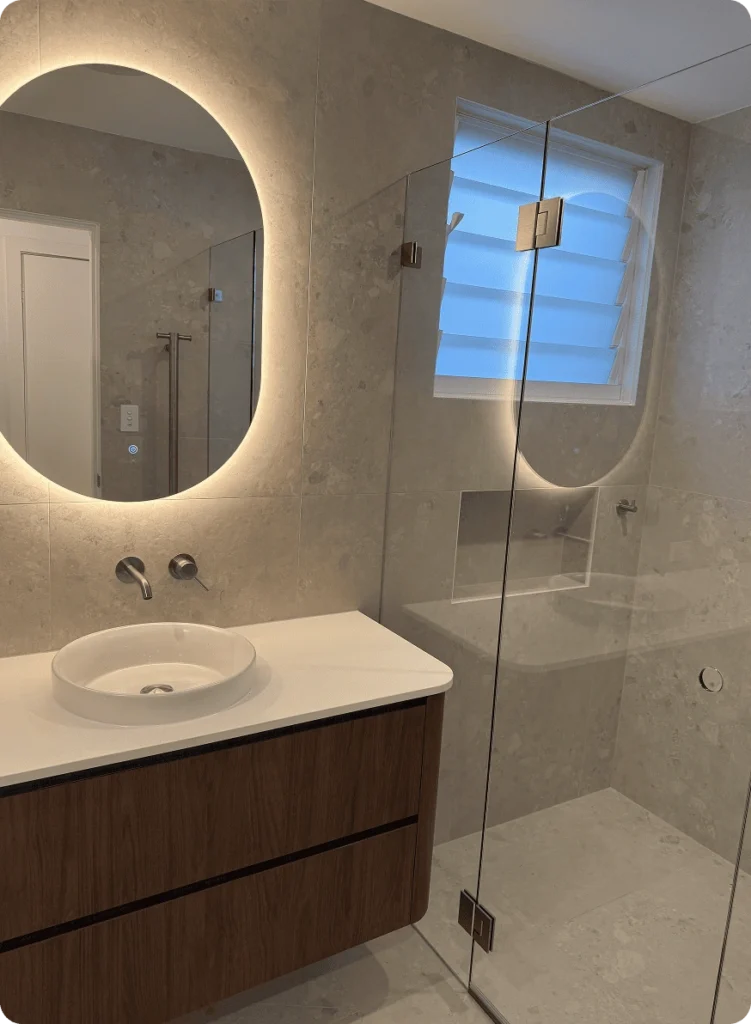
A prime cost item is an allowance for a product you haven’t chosen yet. Think tapware, tiles, appliances, door hardware or a bathroom vanity, which are things where the exact model, and therefore the exact price, isn’t locked in when the contract is signed. The builder includes a realistic estimate for the supply of that item. Once you make your final selection, the figure adjusts up or down to the actual cost.
A PC item covers the supply of the product only, not the labour to install it, which is priced separately in the contract.
What is a provisional sum (PS)?
A provisional sum is an allowance for an item of work that can’t be fully priced until it’s opened up or better understood, such as excavation on an unknown site, structural work behind a wall, or waterproofing to a substrate no one has seen yet. Unlike a PC item, a provisional sum usually covers both the labour and the materials for that portion of work. When the actual scope becomes clear, the sum is adjusted to reflect what the work truly costs.
Prime cost vs provisional sum, side by side
What it covers | |
|---|---|
Prime cost (PC) | An allowance for the supply of a specific product you haven’t chosen yet, such as tapware, tiles, or appliances. It adjusts to the actual item price once you select it. |
Provisional sum (PS) | An allowance for an item of work that can’t be fully scoped yet, such as excavation, structural or waterproofing work. It adjusts to the actual cost of the work once known. |
Why allowances exist — and where people get caught out
Allowances are not a trap. They let a project get underway before every last selection is locked in, which is normal and sensible. The problem starts when a builder sets allowances unrealistically low to make a quote look cheaper than the next one. The headline price wins the job, then the adjustments arrive, and the real cost lands well above the quote.
The way to protect yourself is simple: ask how each allowance was set, whether it’s realistic for the finishes you actually want, and ask to see the allowances itemised rather than buried. A builder who is comfortable explaining the numbers is showing you how they’ll communicate for the rest of the project.

How we handle allowances
We set allowances that reflect the finishes our clients genuinely choose, itemise them clearly, and explain them before you sign, not after. If something needs to adjust, you hear about it from us before it happens, not as a surprise on an invoice. That transparency is the whole point.
FAQ
What is a prime cost item?
An allowance for the supply of a product you haven’t selected yet, such as tiles or tapware. It adjusts to the actual cost once you make your choice.
What is a provisional sum?
An allowance for a piece of work that can’t be fully priced until its scope is clear, such as excavation or structural work, usually covering both labour and materials.
Are provisional sums bad?
No. Used honestly, they’re a normal part of building. They only become a problem when they’re set unrealistically low to win a job.
How do builders estimate allowances?
From experience with similar projects and current supplier pricing. A good builder sets them to match the standard of finish you’re actually after, not the cheapest option available.
Planning a serious renovation?
Talk to a builder who explains the numbers clearly — before the work starts, not after. Tell us about your project.